

The barracks village
The barracks along Wassenaarseweg were built by the German occupiers in 1940. After the war, the Naval Air Service took them into use. The ‘village’ is almost entirely intact and is therefore unique in the Netherlands. But for how much longer?
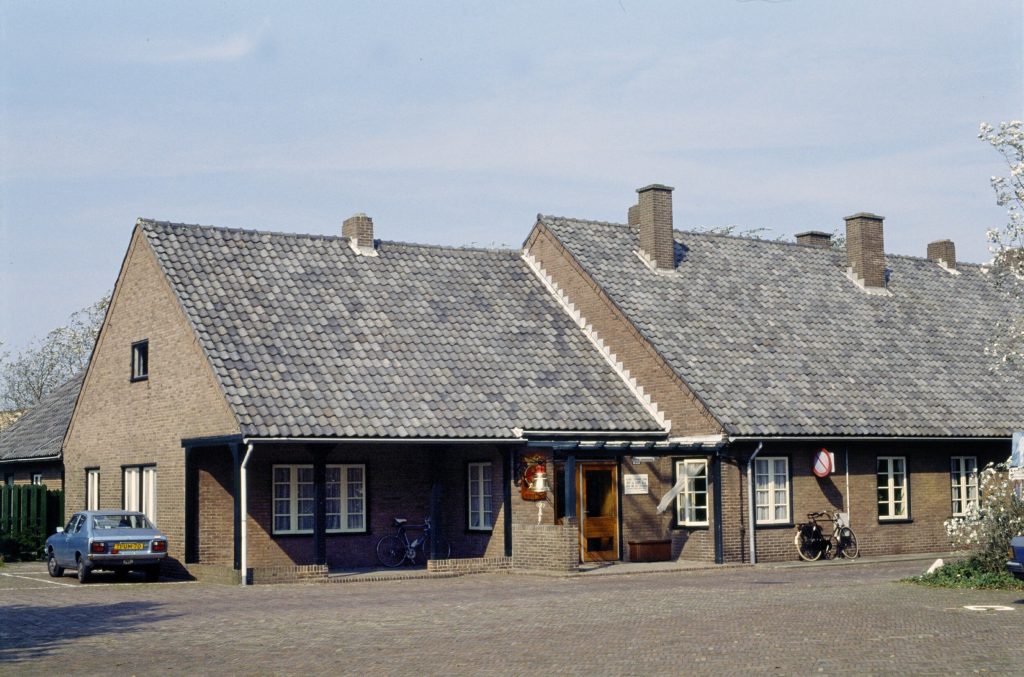
The buildings were camouflaged in a unique way: when viewed from the air, they were designed to resemble a typical Dutch village. The idea was that the Allies would never attack a village. The British and Americans were well aware that these were military barracks – this is evident from aerial photographs and maps produced by the RAF. Yet the buildings were never attacked.
The construction
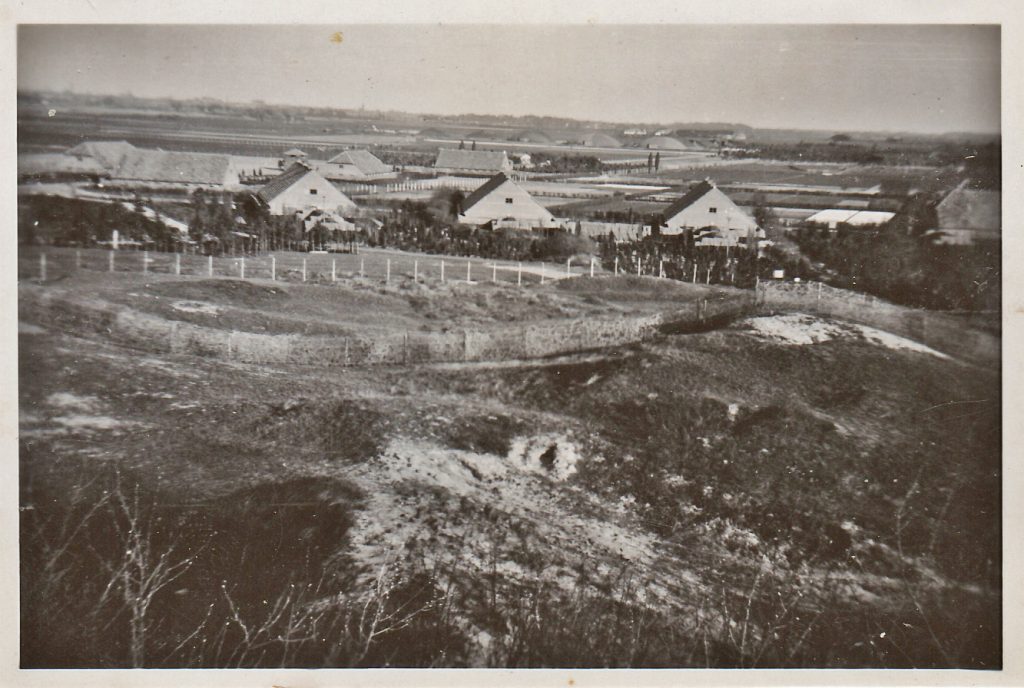
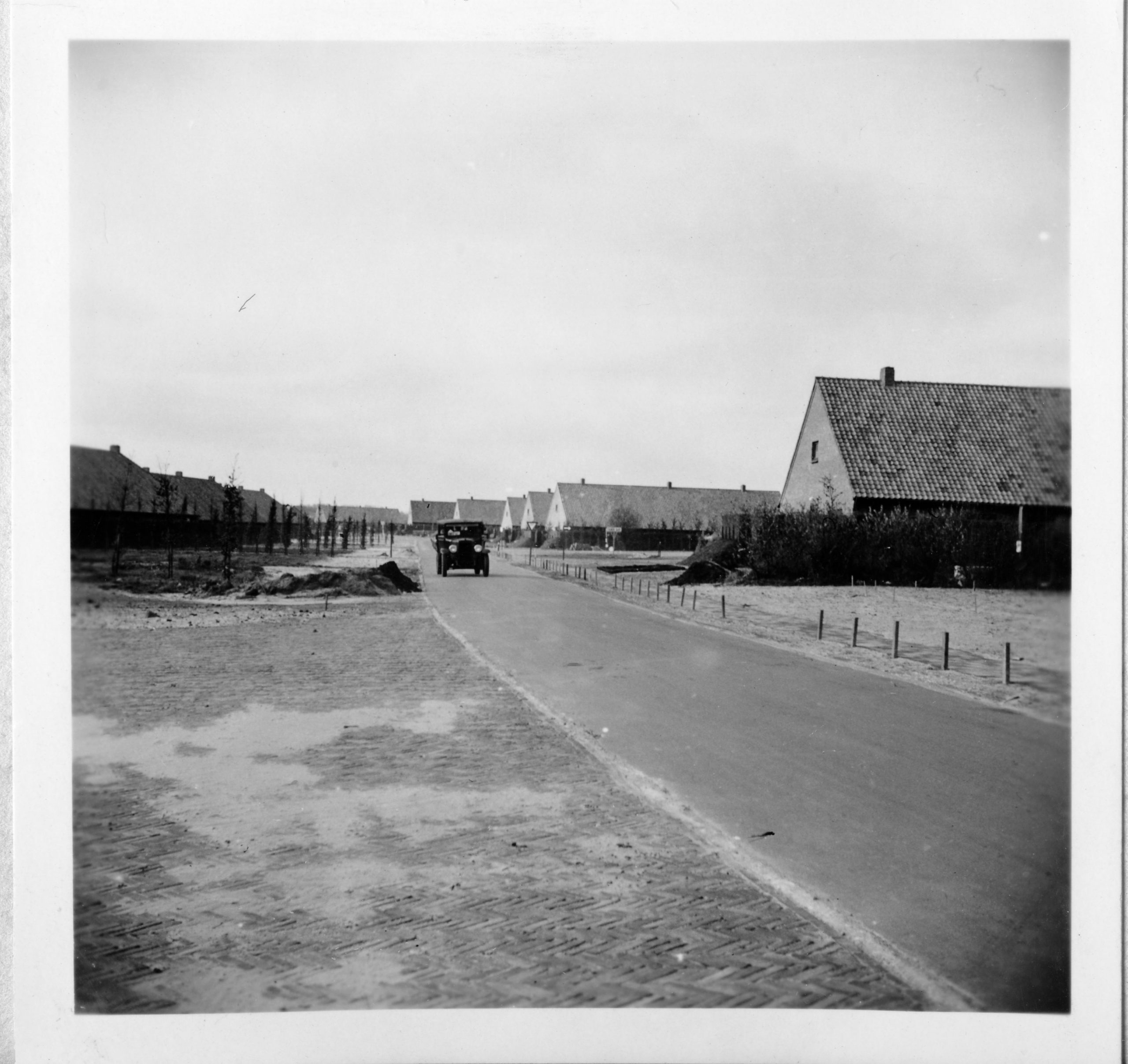
Soon after the surrender on 14 May 1940, the Germans began preparing the airfield for use. As was customary at German air bases, the accommodation for personnel was built some distance from the base. At large ‘Fliegerhorsten’, several barracks camps were erected, whereas at Flugplatz Katwijk there was only one. The barracks were built rapidly from the summer of 1940 onwards. They were designed to resemble farmhouses when viewed from the air. Opposite the entrance to the airfield, a village green was even created. Trees were planted around the barracks and a pond was dug to give the whole area a Dutch feel. A striking feature is the chapel with its modest bell tower, to the right of the entrance to 1e Mientlaan (the access road to the airfield). A wooden cross from the chapel has been preserved. It can be viewed in the visitor centre.
The barracks were built in a simple style, without any decoration. The buildings have fairly thin cavity walls. At other airfields, such as Soesterberg and Deelen, the barracks were given thicker walls and iron shutters on the windows and iron doors, so that the buildings could offer some protection during air raids. What makes the Valkenburg barracks village special is that it is almost entirely intact. Although barracks of this type were built at many air bases, they have not been preserved in their entirety anywhere else.
Bunkers
The bunkers and trenches between the barracks are better concealed. The large telephone bunker was built in the autumn of 1942. At that time, it formed part of the ‘Stützpunktgruppe Katwijk-Noordwijk’, a section of the Atlantic Wall. The telephone bunker and the ‘transformer hut’ opposite the access road to the airfield are now jointly listed as a national monument. Inside and beneath the ‘transformer hut’ were switchboards for the telephone network.
There are shelter trenches between the barracks. These were intended to provide cover for the soldiers in the event of an air raid. Even before the war, in 1939, hundreds of these prefabricated concrete huts were built in Rotterdam. They were intended as shelters for civilians. At the time, the Germans installed 31 of them at Flugplatz Katwijk. In the dunes to the south-west of the barracks village stood a bunker complex housing anti-aircraft guns (Flak).
After the war
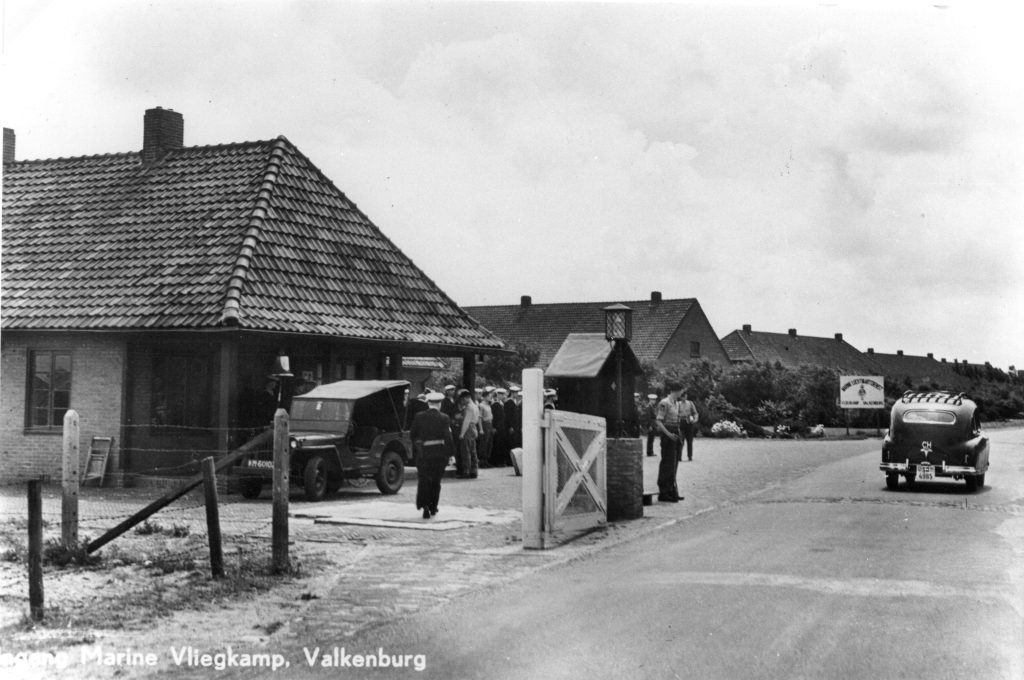
In 1944, most of the Germans left the airfield and the barracks stood empty. After the summer of that year, they were even guarded by Dutch civilians. The fact that the German barracks are still standing is because they remained in use after the war. The ‘village’ has remained intact all this time and the appearance of the buildings has remained virtually unchanged.
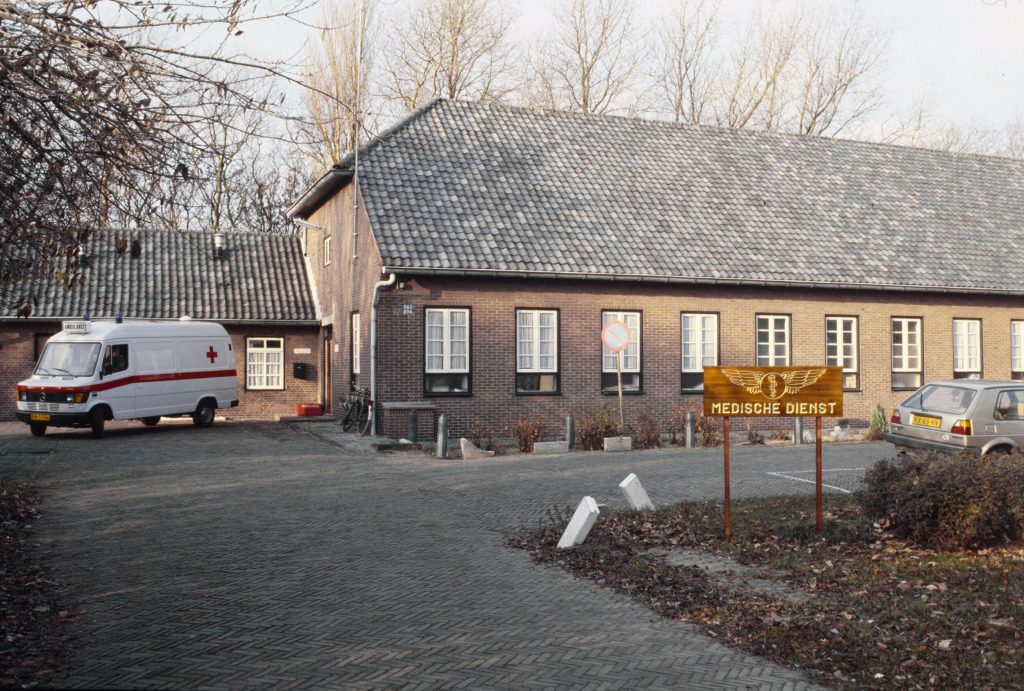
Until the completion of two new accommodation blocks in 1997, naval personnel slept and worked in the barracks. For instance, the commanders of Valkenburg Air Base had an office in the command building where the German staff used to be based. The adjacent mess hall was converted into a theatre. Officers and non-commissioned officers had their own quarters, the Longroom and the Gouden Bal (Golden Ball) respectively, in the buildings on the south side (D1 and D5). The guardhouse on the Katwijk side also retained its original function: it successively housed the Commander of the Naval Aviation Service and later the Naval Police.
The future
Strange as it may seem, many of the barracks are falling into disrepair and are at risk of demolition. The buildings on the dune side are owned by the dune water company Dunea. The company wishes to expand its water extraction operations and claims that the buildings pose a risk to drinking water quality. Although Katwijk council had previously granted the barracks village the status of a municipal monument, in 2019 it nevertheless granted permission for the demolition of 14 of the 18 buildings. The barracks on the other side of Wassenaarsweg, including the chapel, are owned by the Central Government Property Agency (RVB). Their future is uncertain.
The Cuypers Society took legal action to block Dunea’s plans. In 2022, the court ruled that no more than eight buildings could be demolished. Both Dunea and the heritage organisation lodged appeals. In 2026 the Council of State gave Dunea permission to demolish 14 barracks. Dunea will however retain and refurbish a small group of buildings around the village green, including the main building and the theatre.
Read the following articles